
These aren't where most businesses start. They're where a few end up.
If you don't have a working website and a decent Google presence yet, start there — it's most of the value for most businesses. This page is for the smaller number of operators who already have that and are hitting a different kind of ceiling.
This is not our core offer. It's a deliberate exception.
Avarie Media's primary work is websites, local visibility, and the review and follow-up systems behind them — that's the right starting point for the vast majority of local businesses we talk to. The services on this page are different. They're for owners who already have the fundamentals in place and are now dealing with operational or sales problems that a better website can't fix: a sales process that depends entirely on the owner, a CRM nobody actually uses, or a database of old leads nobody has called back.
We take on a limited number of these engagements at a time, because they require real operator involvement, not a template.
Senior operational judgment, without a full-time hire.
Many owner-operators reach a size where the business needs a real operations function — someone thinking about staffing, dispatch, workflow, and bottlenecks full-time — but not yet a full-time salary's worth of need. Fractional operations is part-time, senior-level involvement: reviewing how work actually moves through the business, identifying where it breaks down, and helping fix it alongside your team.
This is hands-on. We sit in on calls, look at real jobs, and work with whoever runs day-to-day operations today.
Someone accountable for growth as a whole, not just marketing.
A fractional Chief Growth Officer engagement looks at marketing, sales, pricing, and retention as one connected system instead of separate departments reporting to no one in particular. We set growth priorities, review performance against them monthly, and adjust — the way an in-house executive would, at a fraction of the cost and time commitment.
- Quarterly growth priorities and monthly accountability reviews
- Marketing, sales, and retention viewed as one system
- Direct involvement in pricing and offer strategy
Most local businesses don't have a sales process. They have an owner.
If every estimate, every follow-up call, and every closed deal runs through one person's memory, the business has a ceiling built into its structure. We review how leads move from first contact to signed job, document what actually works, and build a repeatable process a second or third salesperson could run.
This includes call review, script and objection-handling guidance, quoting structure, and close-rate tracking — grounded in your actual calls, not a generic sales training course.
A CRM nobody uses correctly is worse than no CRM at all.
Most contractors already pay for a CRM or field service platform. Very few use it in a way that actually tells them what's happening in the business. We audit how your CRM is set up, fix the pipeline stages and data hygiene, and build the reporting your team will actually look at.
- Pipeline and stage audit against how deals actually move
- Data hygiene and duplicate cleanup
- Automation rules for follow-up, reminders, and handoffs
- Reporting built around the numbers ownership actually checks
The database of old leads sitting untouched is usually worth a phone call.
Almost every established business has years of quotes, past customers, and inquiries that went cold — not because the interest disappeared, but because nobody followed up again. We use AI-assisted messaging and call workflows to reach back out to that list, qualify who's still interested, and hand warm conversations to your team.
We don't promise a specific number of reactivated customers — the size of the opportunity depends entirely on the list and how the business follows up. What we build is the system that gives those old leads a real second look.
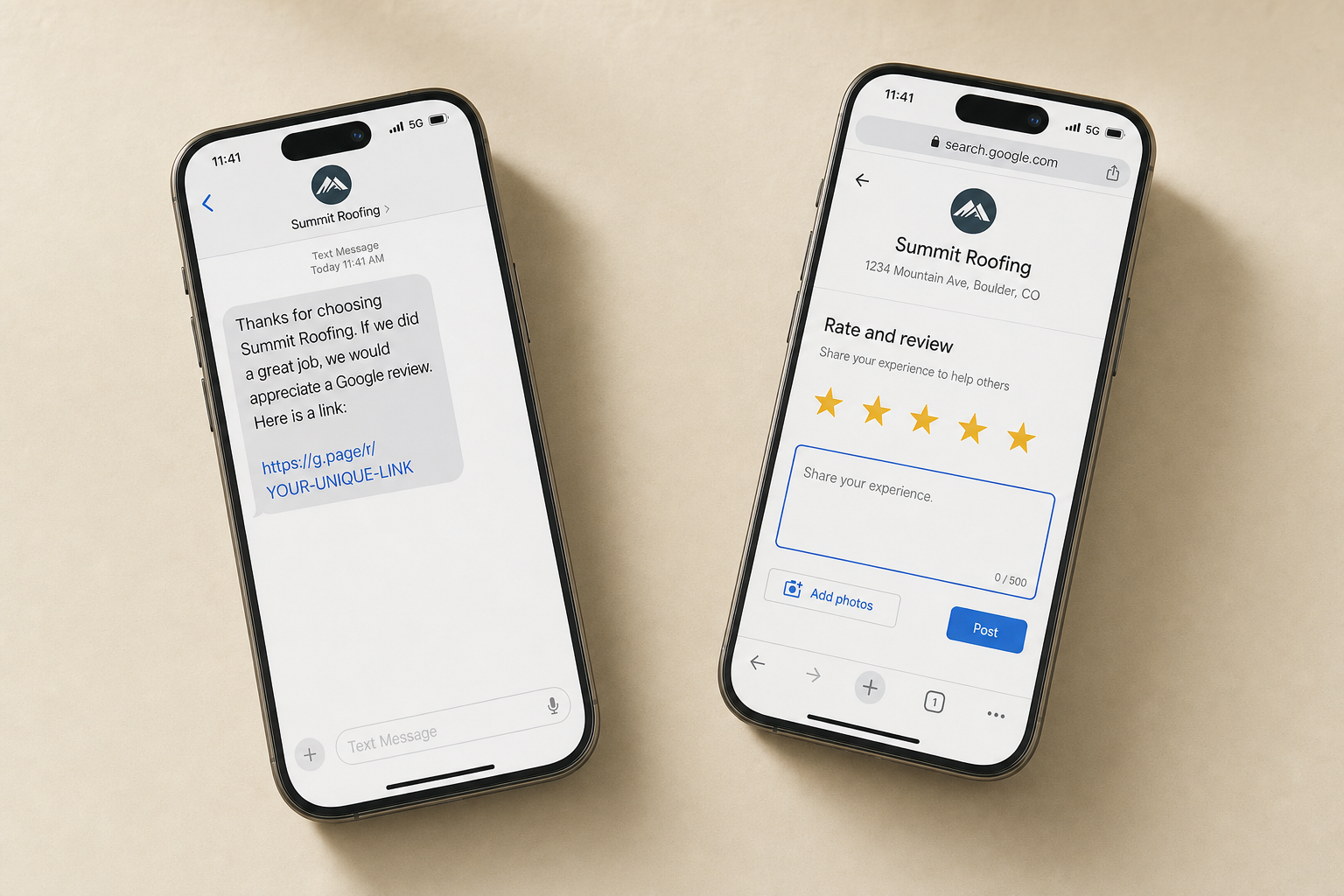
Sometimes the problem doesn't have a category yet.
Not every operational bottleneck fits neatly into ops, sales, or CRM. Some engagements start as an open conversation about what's actually slowing the business down — staffing, pricing, expansion into a new service line, or a partnership decision — and we scope the work from there.
These engagements are shaped around a specific business problem rather than a fixed service list, which is why they usually start with a conversation, not a proposal.

Nearly a decade inside the businesses these services are built for.
Before Avarie Media, Angel Ortiz spent almost ten years in B2B sales embedded with contractors and home-service operators — sitting in on sales calls, watching dispatch boards fill and fall apart, and seeing firsthand where a growing business outgrows its own systems.
These advanced services come directly from that operator experience, not from a general consulting framework applied to whatever industry walks in the door.
"A website can't fix a sales process that lives entirely in one person's head. At some point the business needs a system — not another marketing tactic."
A quick, honest self-check before reaching out.
- You already have a working website and a functioning Google presence
- You're generating leads but losing too many of them to a weak sales process
- You have a CRM or database that's disorganized, underused, or full of cold leads
- You want senior involvement, not another junior account manager
- You don't yet have a credible website or Google Business Profile
- You're not generating any inbound leads to optimize yet
- You're looking for a quick fix rather than an operational change
- You're not ready to make changes to staffing or process based on findings
If you're in the second column, start with a free website assessment instead — it's the right first step for most businesses.
A conversation first. A proposal after.
Because these engagements are shaped around specific operational problems, we don't sell a fixed package upfront. Here's the general shape of how it goes.
Conversation
An honest talk about where the business is stuck, and whether an advanced services engagement is actually the right fix — sometimes it isn't.
Assessment
A closer look at the specific system in question — sales calls, CRM setup, lead database, or operational workflow — to understand what's actually happening.
Scope and terms
A specific proposal built around what we found — timeline, involvement level, and what success looks like for this particular engagement.
Working engagement
Ongoing, hands-on involvement with regular check-ins — not a one-time report that sits in an inbox.
Structured around involvement, not a fixed menu.
Advanced services are priced based on the level of involvement required — how many hours a month, how many systems are in scope, and whether the engagement is a short diagnostic or an ongoing fractional role. That's different from our core website and managed-plan pricing, which is more standardized. We'll always walk through the reasoning behind a proposal before you commit to anything.
If you've outgrown the basics, let's talk about what's next.
Not sure which side of this you're on? Start with the free assessment — it's the fastest way to find out.